
Comparison
Bamboo Decking vs WPC vs Natural Timber: Complete Performance Comparison for Vietnam Resorts & Villas
A detailed side-by-side technical comparison of strand-woven bamboo decking, WPC (wood-plastic composite), and natural timber for outdoor applications in Vietnam resorts, villas, and landscape projects. Covers durability, sustainability, cost, and specification guidance.
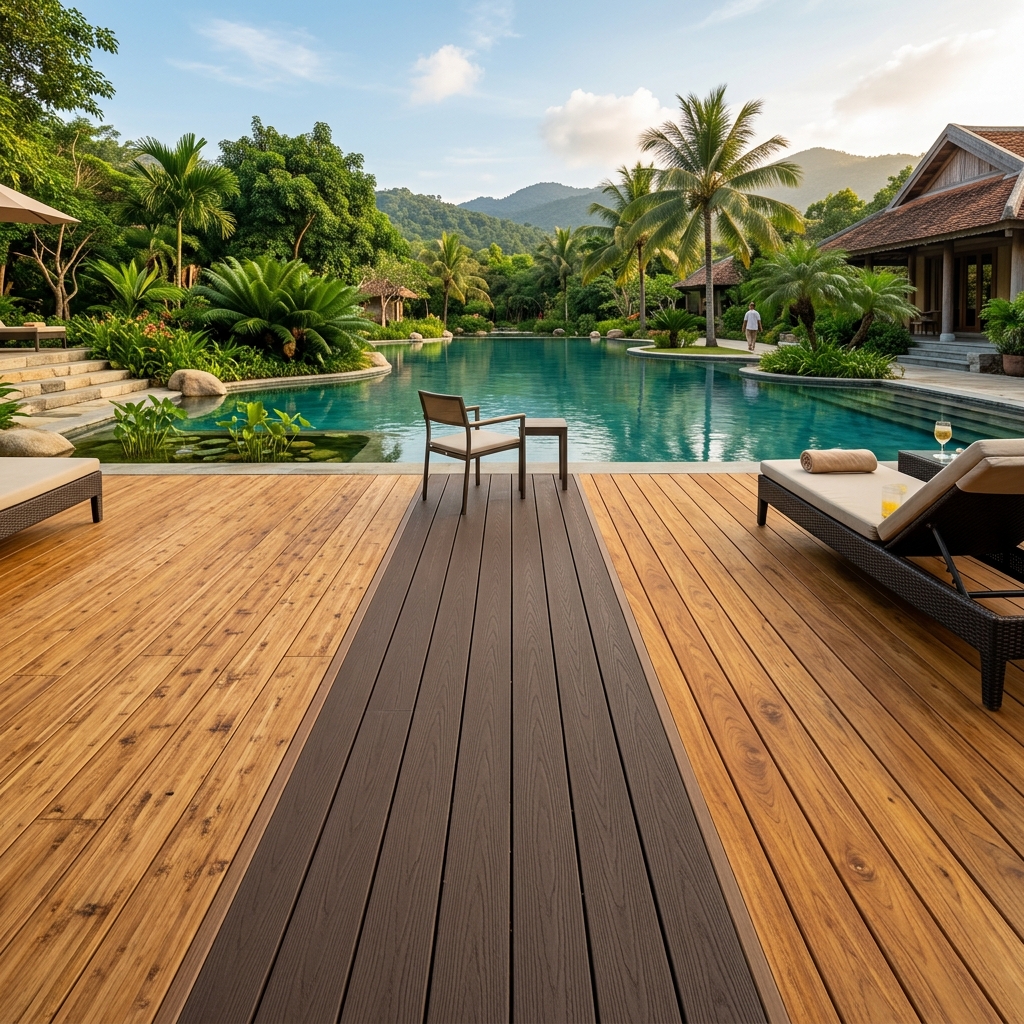
Bamboo Decking vs WPC vs Natural Timber: Complete Performance Comparison for Vietnam Resorts & Villas
Outdoor decking is one of the most visually dominant and technically demanding material categories in resort, villa, and landscape architecture. The choice of decking material affects not only the aesthetic character of an outdoor space, but also its durability in tropical conditions, its maintenance requirements over the building's lifetime, its environmental credentials, and ultimately, the total cost of ownership.
In Vietnam's booming resort and high-end residential sector — from the beachfront developments of Da Nang to the hilltop eco-lodges of Sapa — architects and procurement teams face a consistent question: which decking material delivers the best balance of performance, sustainability, and cost?
This guide provides a rigorous technical comparison of the three primary outdoor decking materials specified in Vietnam: strand-woven bamboo, WPC (Wood-Plastic Composite), and natural timber species (Merbau, Teak, Ipe).
1. Material Overview
1.1 Strand-Woven Bamboo Decking
Strand-woven bamboo is manufactured by shredding Moso bamboo culms into fiber strands, saturating them with resin (typically phenol-formaldehyde or bio-based binders), and compressing at high temperature and pressure to achieve densities of 1,100–1,250 kg/m³ — exceeding most hardwood species.
The resulting board is dimensionally stable, extremely hard, and, when thermally modified for outdoor use, demonstrates excellent resistance to moisture, insects, and UV degradation.
Manufacturing highlights:
- Raw material: Moso bamboo (Phyllostachys edulis), harvested at 5–6 years maturity
- Compression pressure: 180–220 kg/cm²
- Post-processing: Thermal modification (carbonization) or UV-resistant coating for outdoor use
- Net carbon sequestration: Bamboo sequesters CO₂ during growth; strand-woven boards typically carry a negative carbon footprint per EPD
1.2 WPC — Wood-Plastic Composite
WPC decking is produced by blending wood fiber (30–60% by weight) with recycled polyethylene (HDPE) or polypropylene (PP) thermoplastic, extruded through a die to create hollow or solid board profiles.
The polymer matrix provides weather resistance and structural integrity; the wood fiber provides rigidity, workability, and a surface texture that approximates natural wood. Quality varies significantly between manufacturers.
Key quality differentiators:
- Wood-to-polymer ratio: Higher wood content = better rigidity, lower weather resistance
- Hollow vs solid core: Solid core = better structural performance, higher cost
- Capstock co-extrusion: A premium polymer shell over the WPC core dramatically improves UV and stain resistance
- UV stabilizer package: Critical for tropical markets — specify UV stabilizer content ≥ 0.5% by weight
1.3 Natural Timber
Natural timber decking — principally tropical hardwood species such as Merbau (Intsia bijuga), Teak (Tectona grandis), Ipe (Handroanthus spp.), and Accoya (acetylated radiata pine) — has been the traditional choice for high-end outdoor applications due to its warmth, character, and proven longevity under proper maintenance.
Market reality in Vietnam (2025–2026):
- CITES restrictions have progressively reduced legal supply of tropical hardwoods from Southeast Asia
- Genuine FSC-certified Teak is increasingly imported from Panama, Costa Rica, and Ghana — with import lead times of 60–120 days from South America
- Price volatility is high; Ipe prices have increased approximately 35% in three years due to supply constraints
2. Technical Performance Comparison
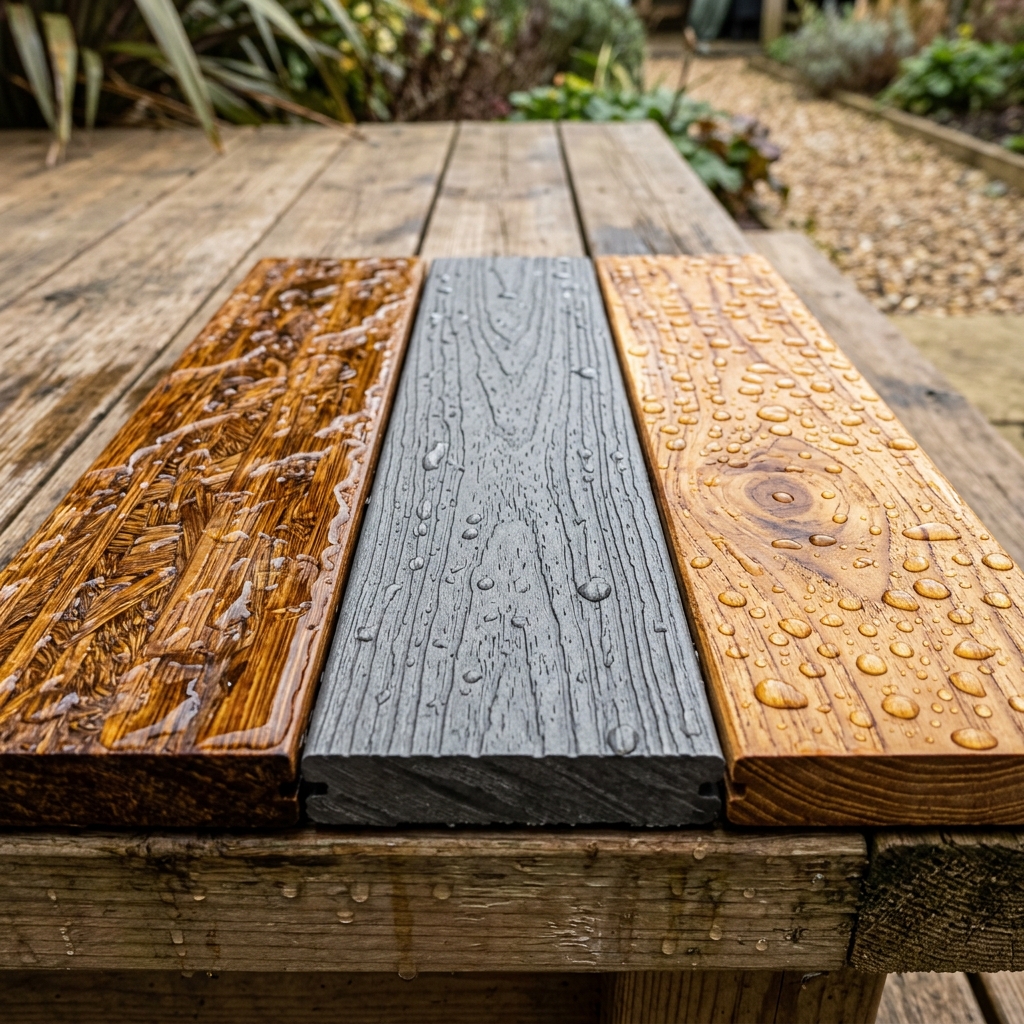
| Performance Criterion | Strand-Woven Bamboo | WPC | Natural Timber (Teak) |
|---|---|---|---|
| Density (kg/m³) | 1,100–1,250 | 1,000–1,150 | 600–900 |
| Janka Hardness | 3,000+ lbf | 800–1,200 lbf | 1,000–2,330 lbf |
| Compressive Strength | 200–240 MPa | 25–35 MPa | 45–65 MPa |
| Expected Service Life | 20–30 years | 15–20 years | 10–20 years* |
| Moisture Absorption | < 5% (treated) | < 1% | 8–15% |
| Thermal Expansion | Low | Medium-High | Medium |
| Slip Resistance (Rz) | ★★★★ | ★★★★★ | ★★★ |
| Heat Absorption | Low | High ⚠️ | Low-Medium |
| Insect Resistance | Excellent | Excellent | Good–Excellent |
| UV Resistance | Good–Excellent | Good (capstock) | Fades without oiling |
| Maintenance Frequency | Every 2–3 years | None | Every 6–12 months |
| Fire Classification | B-s1,d0 | C-s2,d0 | D-s2,d0 |
| Sustainability Score | ★★★★★ | ★★★ | ★★–★★★★ |
| Price Range (VND/m²) | 1.2M – 1.8M | 0.5M – 1.2M | 1.5M – 4.0M |
*Natural timber service life is heavily dependent on species, maintenance discipline, and exposure conditions.
3. Performance Deep-Dive: The Critical Factors
3.1 The WPC Heat Problem
WPC decking has a significant thermal mass advantage in cool climates, but in Vietnam's tropical conditions, this becomes a serious liability. Dark-colored WPC decking in direct sun can reach surface temperatures of 65–80°C — causing burn injuries to bare feet and making pool deck areas unusable during peak afternoon hours.
Mitigation strategies for WPC:
- Specify light-colored WPC profiles (Lab* lightness value L* > 60)
- Use hollow-core profiles to reduce thermal mass
- Provide adequate shade coverage for barefoot traffic areas
- Specify decking boards with grooved anti-slip profiles — smooth-faced WPC becomes dangerously slippery when wet
Practical recommendation: For barefoot areas (pool decks, spa pathways, children's areas), WPC is not recommended regardless of color. Bamboo or natural timber are preferred.
3.2 Bamboo vs Timber: The Sustainability Question
For projects pursuing LEED v4.1, LOTUS (Vietnamese green building rating), EDGE, or corporate ESG reporting:
- Bamboo is classified as a rapidly renewable material (harvest cycle 5–6 years vs 30–50 years for tropical hardwoods). It contributes to LEED Materials & Resources credits.
- FSC-certified timber is accepted for LEED credits, but chain-of-custody documentation must be carefully verified. Many Vietnamese contractors source "FSC-equivalent" timber that does not carry valid third-party certification.
- WPC with recycled HDPE content ≥ 50% qualifies for recycled content credits but contributes no rapidly renewable credit.
Carbon footprint (LCA per m² of decking, 20-year timeframe):
- Strand-woven bamboo: Net negative (carbon sink + minimal processing energy)
- WPC (recycled content): Low positive (recycled polymer reduces virgin plastic production impact)
- Natural timber (FSC certified): Near carbon neutral (forest sequestration balanced against harvest)
- Natural timber (non-certified): Carbon positive (deforestation impact not offset)
3.3 Installation Considerations
Bamboo: Requires stainless steel hidden fasteners (T-clips) to avoid face-screw visibility. Board expansion must be accommodated — maintain 5–8 mm gap at board ends; use 3 mm spacer between board sides. Sub-frame: aluminum or preserved hardwood joists at maximum 400 mm centers.
WPC: The hollow core profile makes face-fixings visible and structurally weak. Always specify co-extruded clip systems. WPC expands more than bamboo in heat — maintain 10 mm gaps at board ends. Aluminum sub-frames are preferred over timber for WPC installations.
Natural Timber: Traditional face-fixing with stainless steel screws (countersunk and plugged) or hidden fasteners. Acclimatization period of 2–4 weeks required before installation in high-humidity environments. Gaps of 5 mm between boards allow for movement and drainage.
4. Decision Framework: Which Material for Which Project?
Choose Strand-Woven Bamboo When:
- Project carries LEED, LOTUS, EDGE, or ESG certification requirements
- Application involves barefoot traffic areas: pool decks, spa terraces, resort pathways
- Client wants natural aesthetics with minimal maintenance commitment (3-year maintenance cycle vs annual for timber)
- Budget is mid-premium and long-term TCO is a consideration
- Project is a branded resort (Vingroup, Sun Group, BIM Group) where sustainability narrative matters to end-users
Choose WPC When:
- Cost is the primary constraint and the budget does not support bamboo or timber
- Application is commercial walkways, public pathways, or covered terraces (not barefoot areas)
- Client requires consistent color uniformity across large areas (WPC has no natural variation)
- Maintenance team is limited and zero-maintenance is prioritized over premium aesthetics
- Project is not pursuing green building certification and sustainability metrics are not required
Choose Natural Timber When:
- Client specifically requests natural wood character and accepts the maintenance commitment
- Species is FSC-certified with verifiable chain-of-custody documentation
- Budget is premium (> 2.5M VND/m²) and dedicated maintenance staff will manage regular oiling and treatment
- Application is smaller decorative areas (feature deck, terrace furniture platform) rather than large-scale coverage
- Design intent specifically requires unique grain character that neither bamboo nor WPC can replicate
5. Vietnam Market Insights: What Major Developers Are Specifying
Vietnam's resort and luxury residential sector has undergone a notable shift in decking material preferences over the 2022–2026 period:
Bamboo adoption is accelerating: Major developers including Vingroup, Sun Group, and BIM Group have specified strand-woven bamboo decking in recent flagship projects as part of their ESG commitments. The material now represents approximately 30–35% of high-end resort decking specifications in Vietnam, up from less than 10% five years ago.
Quality WPC segmentation is emerging: The Vietnamese WPC market has bifurcated sharply between low-quality domestic products (hollow core, no capstock, poor UV stabilization) and premium capstock WPC imported from Europe and Australia. Architects are increasingly specifying third-party-tested WPC with verified technical datasheets rather than accepting manufacturer claims at face value.
Natural timber supply constraints: The supply of quality natural timber (particularly genuine Ipe and certified Teak) has become genuinely difficult in Vietnam. Import lead times from South America regularly exceed 90 days; prices have risen 30–40% since 2022. This supply pressure is accelerating the specification of bamboo alternatives even for clients who would historically have specified timber.
Regional climate note: Vietnam's coastal resort locations (Da Nang, Nha Trang, Phu Quoc) experience conditions that are particularly demanding on decking materials — salt air, high UV radiation, monsoonal rainfall, and extreme humidity fluctuations. All three material types require specific consideration of coastal performance in these environments; bamboo and premium WPC generally perform better than untreated natural timber under coastal salt exposure.
6. Total Cost of Ownership Analysis (20-Year Projection)
| Cost Component | Bamboo | WPC | Natural Timber (Teak) |
|---|---|---|---|
| Initial material cost (VND/m²) | 1,500,000 | 800,000 | 2,500,000 |
| Installation cost (VND/m²) | 250,000 | 200,000 | 300,000 |
| Annual maintenance cost (VND/m²/yr) | 30,000 | 5,000 | 120,000 |
| 20-year maintenance total | 600,000 | 100,000 | 2,400,000 |
| Replacement at year 20? | No | Possible | Likely |
| Total 20-yr TCO (VND/m²) | ~2,350,000 | ~1,100,000 | ~5,200,000 |
Analysis based on 100 m² installation; replacement costs for WPC and timber estimated at 80% of initial material + installation cost. Figures are indicative; obtain site-specific quotations for project budgeting.
For projects where low initial cost is critical and maintenance discipline is uncertain, WPC offers the lowest TCO. For projects where long-term quality, sustainability, and low maintenance are priorities, bamboo delivers superior value despite higher initial cost than WPC.
Ready to Specify? HIASHI Can Help.
Sourcing verified decking materials with proper technical documentation — fire test certificates, durability test reports, sustainability certifications — is time-consuming when approached product by product. HIASHI aggregates verified brands and streamlines the process:
Submit an RFQ → — Send your project requirements (area in m², application type, sustainability certification target, budget range, required certifications) and receive a curated shortlist of decking products with competitive pricing, complete TDS packages, and sample availability.
Talk to AI Advisor → — Ask HIASHI's AI Material Advisor to compare specific bamboo, WPC, or timber products, calculate TCO for your project parameters, identify FSC-certified timber alternatives, or recommend the optimal material for your specific application and climate zone. Available 24/7.
Need material guidance for a project?
Share the technical brief so HIASHI can support material shortlisting, samples, TDS and RFQ preparation.