
Comparison
Biomodified Timber vs WPC vs Natural Teak: Outdoor Decking Comparison for Tropical Climates
A detailed technical and life cycle cost comparison of biomodified timber (Chambroad), WPC composite, and natural Teak wood for outdoor applications in tropical resort and residential projects.

Biomodified Timber vs WPC vs Natural Teak: Outdoor Decking Comparison for Tropical Climates
Outdoor decking is one of the most visually dominant and technically challenging material categories in resort, villa, and landscape architecture.
In tropical regions like Vietnam — with coastal projects enduring high salt concentrations in Central regions and mountain eco-lodges experiencing extreme moisture in Northern highlands — selecting the right outdoor decking material is a critical decision. Architects and developers must bear responsibility for the material's performance for 20 to 30 years after project handover.
This guide provides an independent and detailed technical comparison between the three most commonly specified outdoor decking materials today: Natural hardwood Group I (Teak, Merbau), Wood-Plastic Composite (WPC), and the latest technological breakthrough — Biomodified Engineered Timber (Chambroad Timber).
1. Three Materials — Three Distinct Philosophies
To make smarter sourcing decisions, we must first understand the physical nature and structural philosophy of each material option.
1.1 Natural Hardwood (Teak, Merbau, etc.)
Natural hardwood relies on biological self-defense: natural oils stored inside the wood fibers, high fiber density, and silica content provide natural resistance to water and termites.
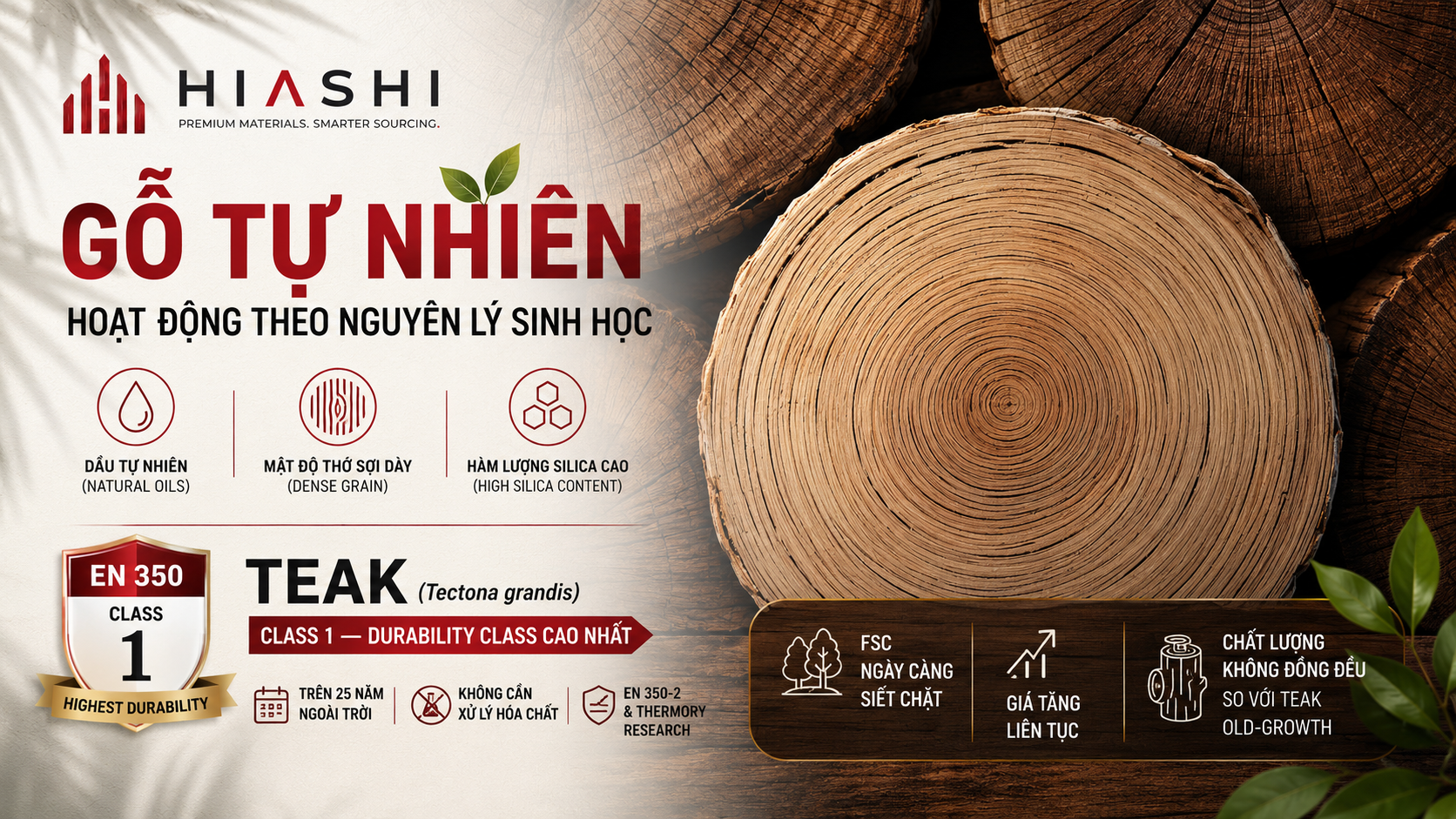
- Pros: Incomparable authentic aesthetics, premium tactile warmth, and unique natural wood grains. Latin American Teak (Tectona grandis) is classified as Durability Class 1 under EN 350, meaning it can last over 25 years outdoors with proper maintenance.
- Cons: Sourcing legal, FSC-certified natural Teak is increasingly difficult and expensive. The quality of industrial plantation Teak is often inconsistent, with younger wood prone to splitting, warping, and termite attacks in hot, humid climates if not treated with annual oil coating.
1.2 Wood-Plastic Composite (WPC)
WPC is a homogeneous industrial product extruded from a mixture of wood fiber (wood flour), thermoplastic polymers (PE, PP, or PVC), and chemical bonding additives.
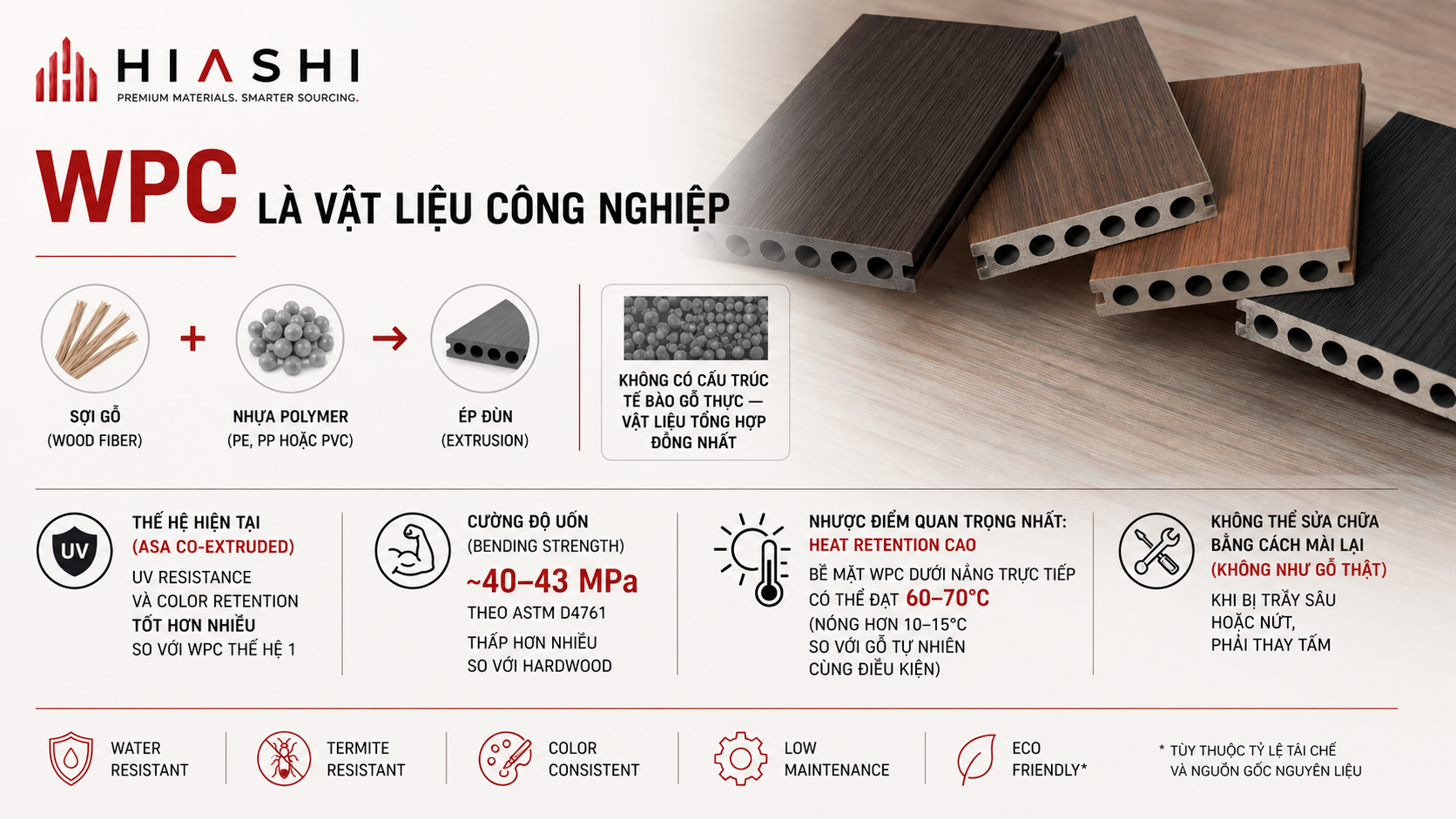
- Pros: 100% resistant to termites (due to plastic content), requires no annual sanding or oiling, and offers a lower initial investment compared to premium natural hardwood.
- Cons: Relatively low Bending Strength (~40–43 MPa according to ASTM D4761). WPC lacks the thermal dissipation cellular structure of real wood, resulting in high heat retention (surface temperatures can reach 60–70°C under direct sunlight), which can burn bare feet around resort pools. Furthermore, WPC cannot be sanded or refinished when deeply scratched or cracked; the entire board must be replaced.
1.3 Biomodified Engineered Timber (Chambroad Timber)
This represents a major breakthrough in material science. Chambroad utilizes biomodification technology — combining thermal modification and bio-chemical processing to restructure the wood's cells, removing the sugars and nutrients that termites feed on without using toxic chemicals.
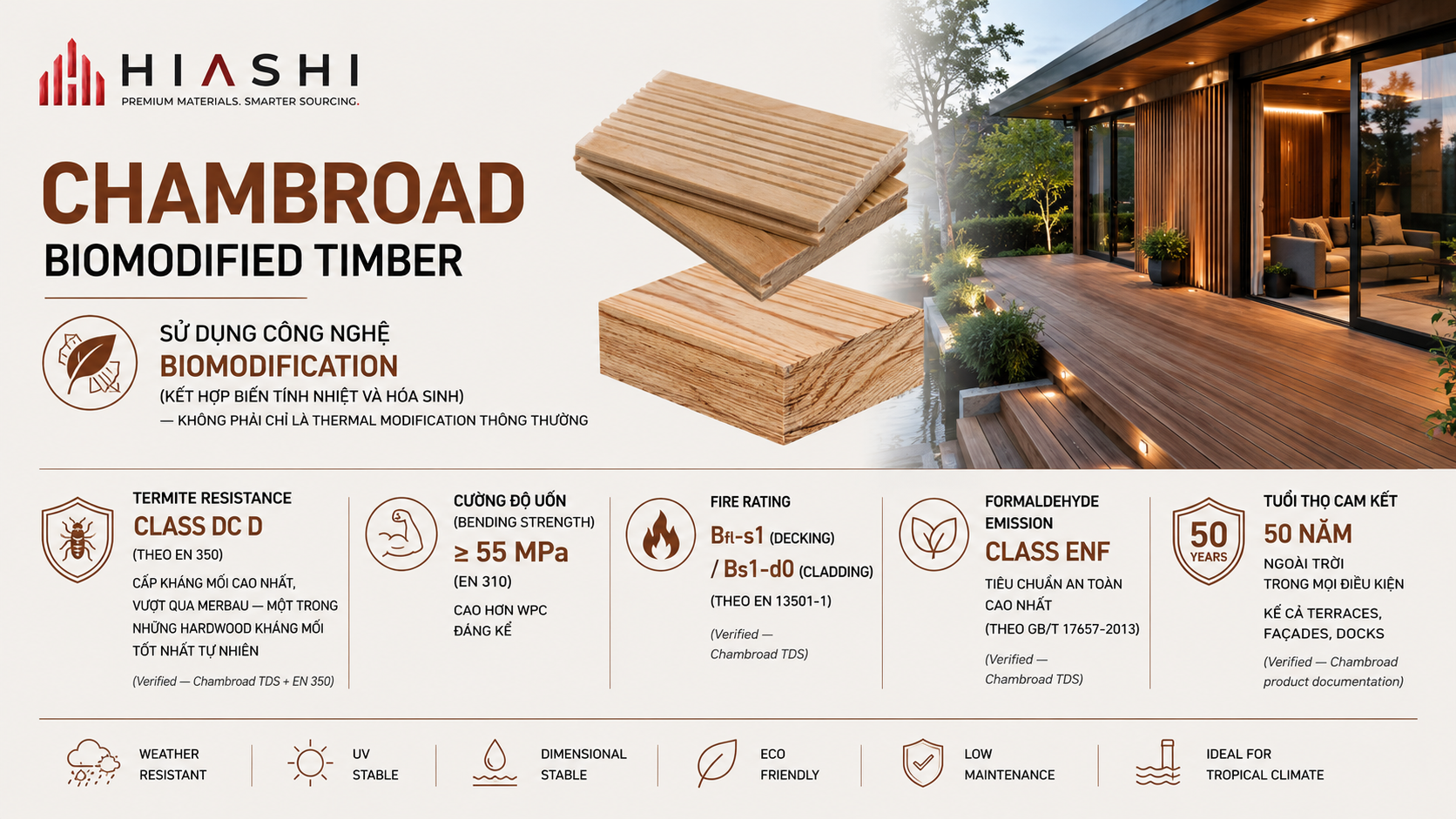
- Pros: Achieves the highest termite resistance rating Class DC D under EN 350 (surpassing natural Merbau). High bending strength of ≥ 55 MPa (EN 310). Excellent fire rating Bfl-s1 (for flooring) according to EN 13501-1. Formaldehyde emissions meet the safe ENF Class standards. Offers a manufacturer's warranty of up to 50 years outdoors.
- Cons: Initial investment is in the premium range, comparable to high-grade natural Teak.
1.4 Strand-Woven Bamboo Decking (HiYo Bamboo)
Strand-woven bamboo decking is manufactured by crushing mature Moso bamboo culms into thin strands, impregnating them with ecological adhesives, and hot-compressing them under extreme heat and pressure.
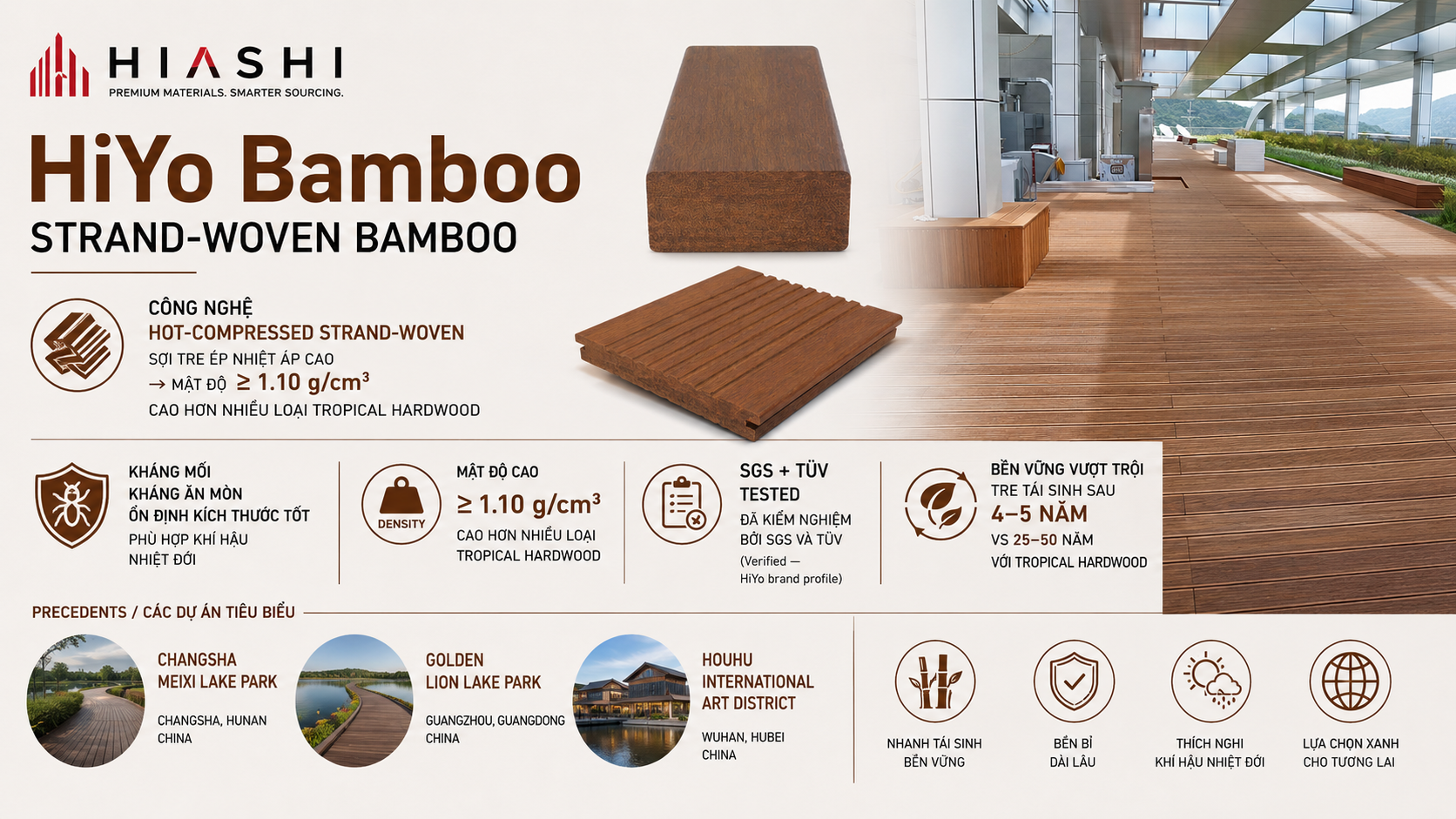
- Pros: Bamboo is a fast-growing renewable resource (4-5 years regrowth cycle), making it an ideal green material for LEED green building certification. Its high density (1,100 - 1,250 kg/m³) provides superior mechanical hardness, excellent termite resistance, and solid dimensional stability.
- Cons: Fewer long-term historical records in tropical climates compared to traditional hardwood species.
2. Technical Comparison Matrix
Here is a side-by-side comparison of 6 core technical criteria that architects and developers can bookmark for future specification reviews:
| Technical Spec | Natural Teak | WPC Composite | Biomodified Wood (Chambroad) | Strand-Woven Bamboo (HiYo) |
|---|---|---|---|---|
| Bending Strength | ~100–120 MPa | ~40–43 MPa (ASTM) | ≥55 MPa (EN 310) | Comparable to heavy hardwood |
| Termite Resistance | Class 1 (EN 350) - Good | Fully resistant (plastic) | DC D (EN 350) - Excellent | Good resistance (SGS tested) |
| Surface Temperature | Moderate (Natural cooling) | Very High (Burn risk) | Low (Stays cool naturally) | Low (Similar to wood) |
| Fire Rating | No standard class | Varies by brand | Bfl-s1 / Bs1-d0 (EN 13501-1) | Under verification |
| Sustainability (ESG) | FSC source risk | Difficult to recycle | FSC CoC Certified | Fast 4-5 year regrowth |
| Outdoor Warranty | 25-50 years (with care) | 15-25 years (ASA grade) | 50 Years (Official warranty) | 20-30 years |
| Refinishing Ability | Can be sanded & oiled | No - Must replace board | Can be sanded & oiled | Can be sanded & oiled |
3. Life Cycle Cost (LCC) Analysis
In developed markets like Europe and Australia, developers evaluate materials through the lens of Life Cycle Costing (LCC) rather than just comparing the initial purchasing price (FOB).
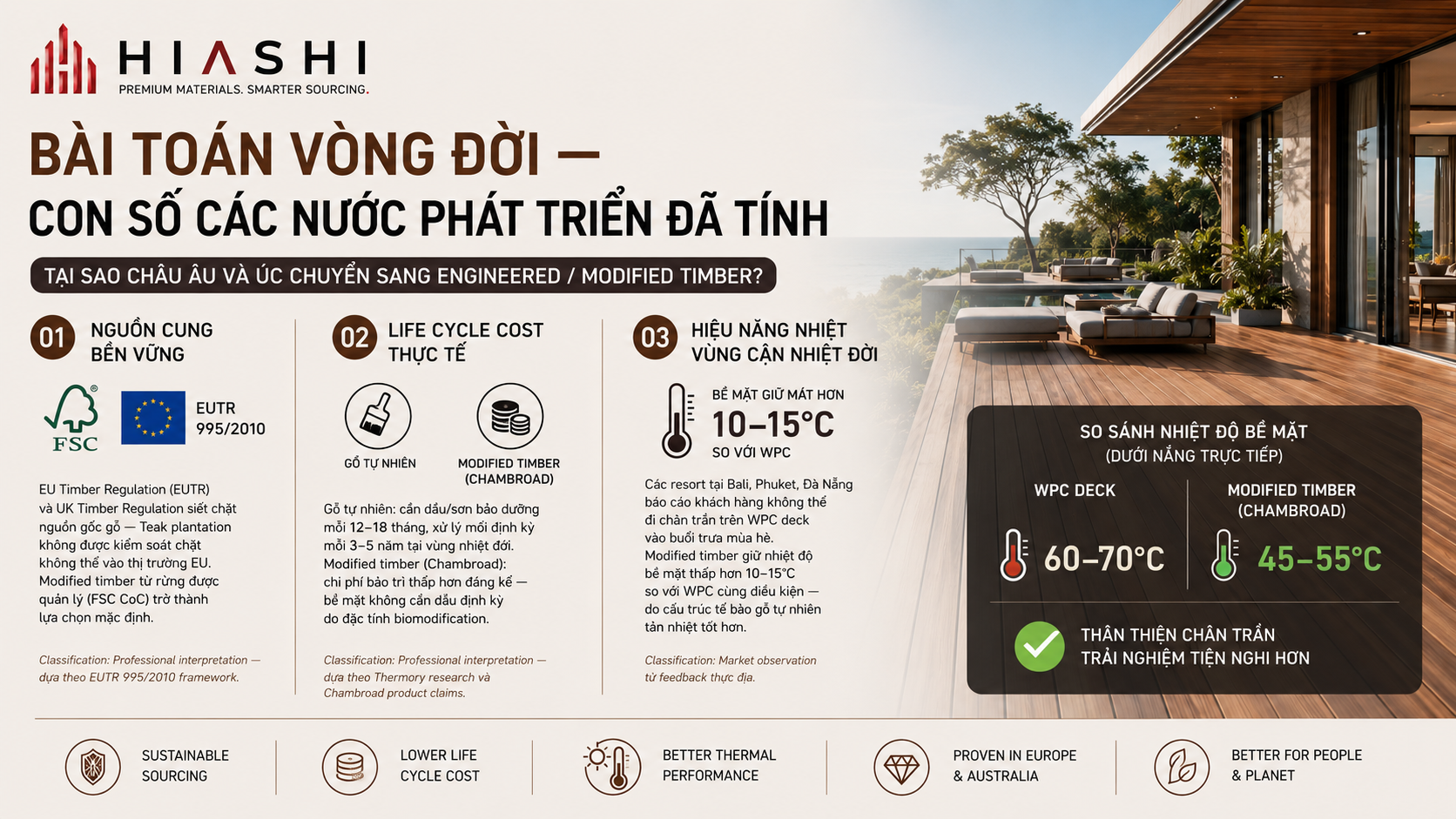
For a typical 500m² pool deck project over a 20-year span:
- Natural Teak: High initial cost. High maintenance cost in years 1 to 5 (requires sanding, mold removal, and Teak oil treatment every 12–18 months, plus termite chemical sprays). After 10–15 years, plantation Teak may rot or crack in high-humidity areas.
- WPC Composite: Medium initial cost. Zero chemical oil maintenance, but high surface heat retention reduces guest satisfaction. After 8–10 years under high UV coastal radiation, WPC degrades, becomes brittle, cracks, and requires partial replacement. Because it cannot be refinished, replacement costs drive up long-term budgets.
- Biomodified Wood: High initial cost. However, due to its stable, modified cellulose structure, the wood does not warp, shrink, or succumb to termites. Maintenance costs are minimal. A 50-year warranty eliminates mid-life replacement risks, offering the lowest LCC over 20 years.
4. 5 Sourcing Questions for Architects Before Specifying Outdoor Decking
To protect your design specifications from being substituted with cheaper alternatives and to prevent performance failures, ask these 5 questions during the design phase:
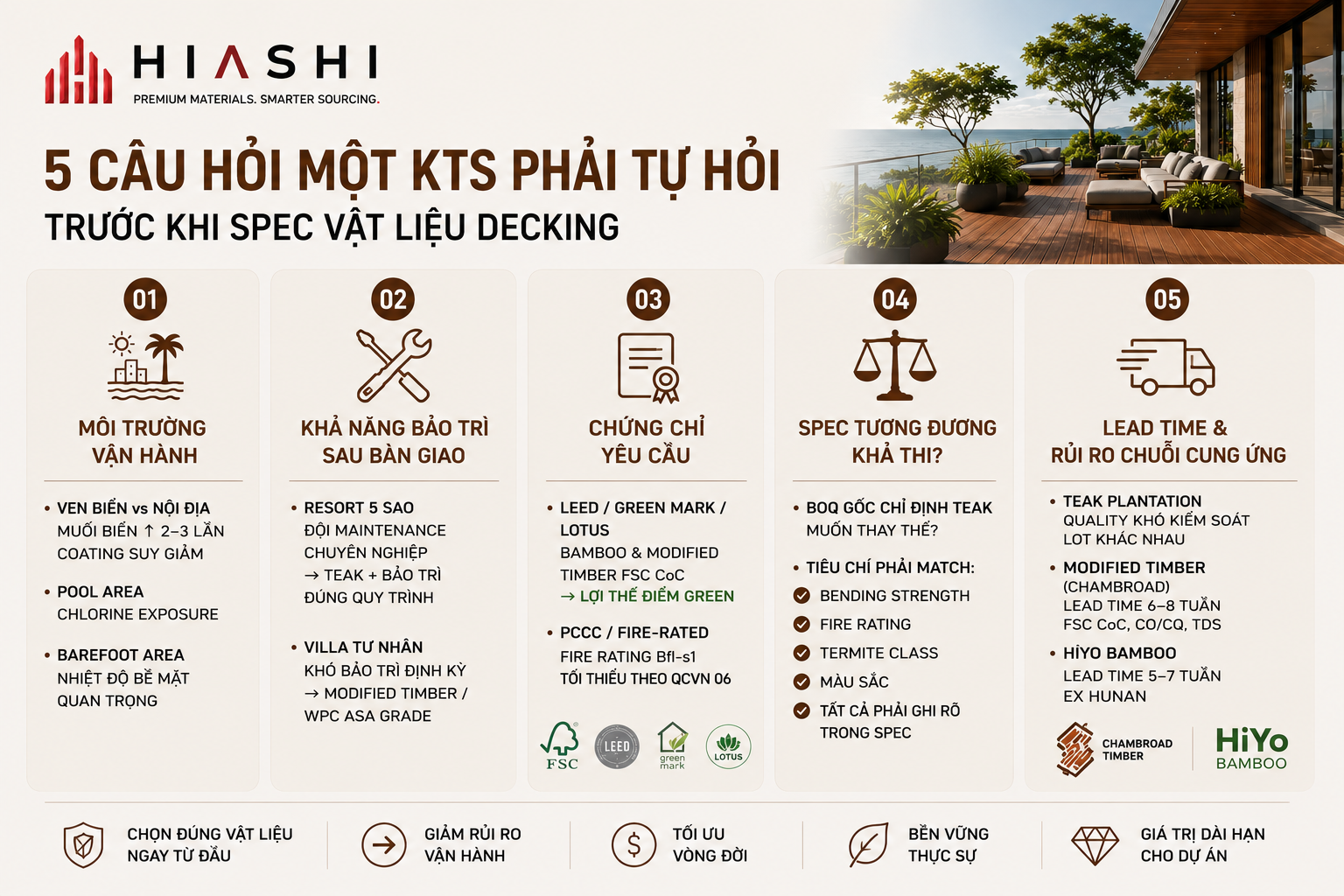
- What is the actual operating environment? Is it a beachfront project exposed to harsh sea salt, or a pool deck contact area with chlorine chemicals?
- What is the developer's maintenance capacity? Does the resort have a professional maintenance crew, or does the project require a "maintenance-free" solution?
- Are there green building (LEED, LOTUS) or fire safety (QCVN 06) requirements? For public spaces or mid-rise facades, the Bfl-s1 fire rating of Chambroad Timber is highly beneficial.
- Supply chain transparency and FSC CoC certification: Do you have complete CO/CQ documents for the verification team?
- Dimensional stability: What is the thermal expansion rate of the material under drastic seasonal temperature shifts?
Conclusion
No single material is perfect for every scenario; choose the one that fits your project framework:
- Choose High-Grade Natural Teak (FSC) if the project prioritizes authentic luxury, has an ample operational budget, and employs a professional annual maintenance crew.
- Choose Co-extruded WPC (ASA Grade) for projects with moderate budgets, smaller surface areas, no bare-foot requirements, and standard fire safety needs.
- Choose Biomodified Chambroad Timber when the project demands maximum durability (30–50 years), the cooling comfort of real wood, Bfl-s1 fire ratings for public structures, and minimized lifetime maintenance costs.
- Choose Strand-Woven Bamboo (HiYo) for sustainable green landscape concepts (Eco-resorts) wanting quick installation and maximum LEED green building points.
Technical Sourcing Support
HIASHI provides an AI-Powered Premium Material Sourcing Platform to help architects and developers compare technical data sheets (TDS), analyze life cycle costs (LCC), and request material samples (mockups) free of charge.
🌐 Contact us and submit your requirements at: hiashi.vn
Tìm kiếm nguồn cung vật liệu này?
Gửi yêu cầu báo giá (RFQ) trực tiếp tới mạng lưới nhà cung cấp BCP của HIASHI.