
Material Guide
HPL Compact Panels: The Architect's Guide to High Pressure Laminate for Facades & Interiors
A comprehensive guide from HIASHI on specifying HPL compact panels (High Pressure Laminate) for exterior facades, wet area wall cladding, laboratory furniture, and interior feature walls — covering technical standards, FunderMax, and Vietnam sourcing.
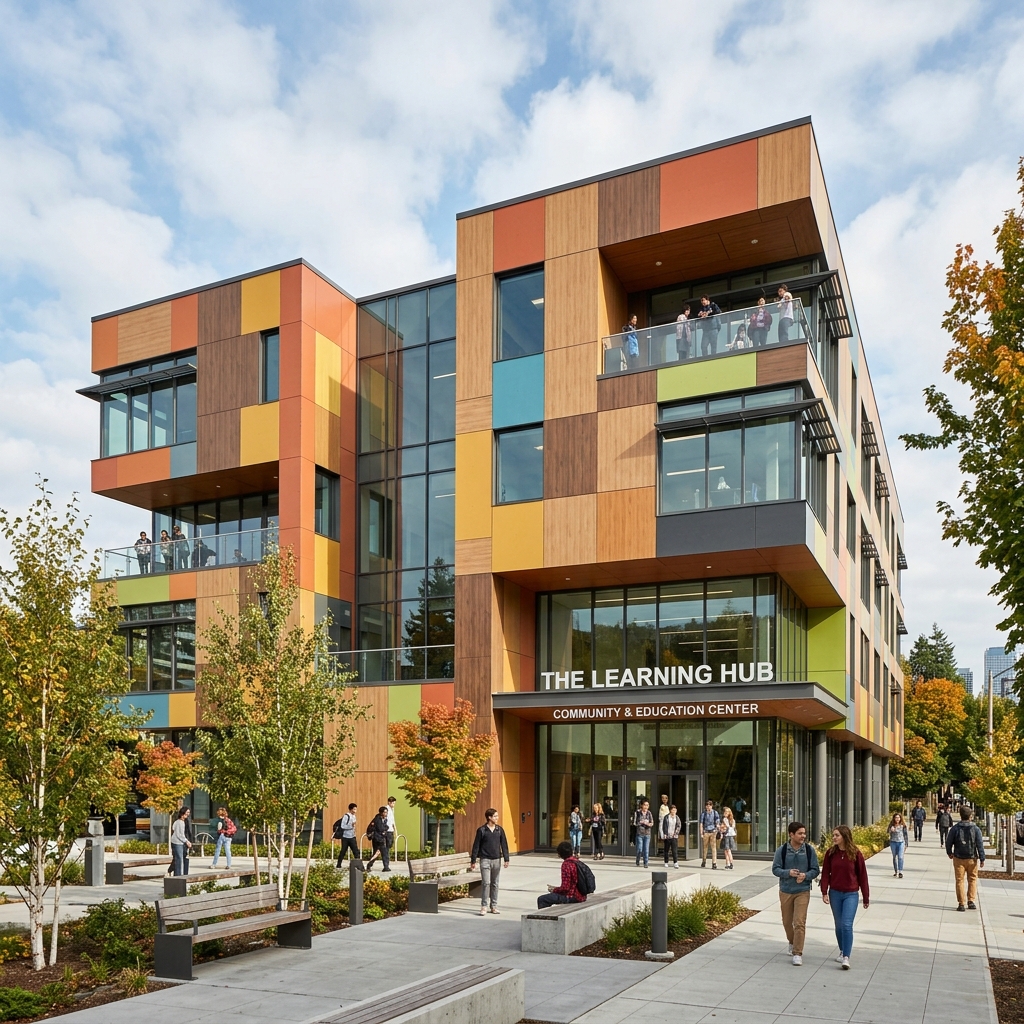
HPL Compact Panels: The Architect's Guide to High Pressure Laminate for Facades & Interiors
High Pressure Laminate (HPL) compact panels have earned a permanent place in the architectural specification toolkit. Unlike standard decorative HPL sheets (which require a substrate), compact HPL is a structural panel in its own right — manufactured under extreme heat and pressure from resin-impregnated kraft paper layers, with a decorative wear surface bonded as an integral part of the panel. The result is a material of remarkable density, chemical resistance, and aesthetic versatility.
In Vietnam's growing premium construction market, HPL compact panels are increasingly specified for facades, toilet cubicles, laboratory countertops, wet area cladding, and interior feature walls.
1. How HPL Compact Panels Are Made
Understanding the manufacturing process explains why compact HPL outperforms standard laminates:
- Multiple kraft paper layers are impregnated with thermosetting phenolic resin
- Decorative surface paper is impregnated with melamine resin
- The stack is pressed under 70–80 bar pressure at 130–150°C
- The result is a solid, homogeneous panel — no substrate, no delamination risk
This manufacturing process gives compact HPL its key properties: near-zero moisture absorption, immunity to delamination, and exceptional hardness compared to wood-based panels.
2. Technical Performance Specifications
| Property | Standard | Premium Grade (FunderMax/Trespa) |
|---|---|---|
| Density | 1.35 g/cm³ | 1.40–1.45 g/cm³ |
| Thickness range | 3mm, 4mm, 6mm, 8mm, 10mm, 12mm | 3–20mm |
| Panel sizes | 2440×1220mm standard | Up to 3050×1300mm |
| Surface hardness (Vickers) | ≥ 80 HV | ≥ 100 HV |
| Flexural strength | ≥ 80 MPa | ≥ 120 MPa |
| Moisture absorption (24h) | ≤ 3% | ≤ 1.5% |
| UV resistance | EN ISO 4892-2 | ≥ 2,000 hours exterior grade |
| Fire classification (exterior) | B-s2,d0 | B-s1,d0 |
| Chemical resistance | Resistant to most acids/solvents | Superior resistance |
| Warranty (exterior) | 10 years | 10–15 years |
3. Application Areas and Thickness Guide
| Application | Recommended Thickness | Notes |
|---|---|---|
| Exterior facade cladding | 8–10mm | Requires ventilated subframe |
| Toilet cubicle systems | 12–13mm | Floor-to-ceiling or standard height |
| Laboratory countertops | 12–20mm | Specify chemical-resistant grade |
| Wet area wall cladding | 6–8mm | Use stainless/plastic fixings |
| Interior feature walls | 6–8mm | Can be bonded or mechanically fixed |
| Furniture and joinery | 3–6mm | Used as surface material over substrate |
| Locker and storage units | 10–13mm | High-humidity environments |
4. Exterior Facade Installation System
HPL compact panels must be installed as a ventilated rainscreen system when used on building facades. The ventilated cavity allows moisture to drain and air to circulate, preventing moisture accumulation behind the panels.
Ventilated Facade Assembly (from outside in)
- HPL compact panel (8–10mm)
- Open joint or sealed joint between panels (10–20mm)
- Ventilated air cavity (minimum 20mm)
- Wind-resistant membrane (if required)
- Insulation (mineral wool or EPS with fire break)
- Structural substrate (concrete, masonry, or steel framing)
Fixing Methods
- Mechanical fixing (visible): Countersunk screws through panel, plugged with matching color cap
- Mechanical fixing (concealed): Undercut anchor or rivet system — cleaner aesthetic
- Floating clip system: Allows thermal expansion without restraint — recommended for large panels
Thermal Expansion Note: HPL compact expands approximately 0.4mm per meter per 10°C temperature change. In Vietnam where roof-level temperatures can exceed 60°C on dark panels, this must be accounted for in the fixing detail to prevent panel buckling.
5. Design Possibilities
HPL compact panels are available in an extraordinary range of surface aesthetics:
| Category | Examples |
|---|---|
| Wood effect | Oak, walnut, teak, pine, driftwood |
| Stone effect | Concrete, marble, slate, travertine |
| Solid colors | Full RAL/NCS color palette |
| Metallic | Brushed aluminum, bronze, copper effect |
| Special surfaces | Anti-fingerprint, anti-graffiti, digital print |
| Textures | Smooth, satin, embossed, structured |
Premium brands like FunderMax (Austria) and Trespa (Netherlands) offer the widest design libraries and the most rigorous exterior durability testing.
6. HPL Compact for Toilet Cubicles: The Benchmark Specification
HPL compact is the global benchmark for premium toilet cubicle systems, specified in airports, shopping malls, hotels, and offices. Key advantages over alternatives (phenolic board, steel, stainless):
| Feature | HPL Compact | Powder-Coated Steel |
|---|---|---|
| Moisture resistance | Excellent | Poor (rusts at joints) |
| Impact resistance | Excellent | Dents |
| Graffiti resistance | Excellent (smooth surface) | Good |
| Hygiene | Non-porous (easy clean) | Seams trap bacteria |
| Color consistency over time | Excellent | Fades |
| Longevity | 15–20 years | 5–8 years |
7. Vietnam Sourcing & Availability
FunderMax and equivalent premium HPL compact panels are available through HIASHI's BCP sourcing network. Full technical documentation, sample boards, and project-specific quotations are available within 48 hours of RFQ submission.
Tìm kiếm nguồn cung vật liệu này?
Gửi yêu cầu báo giá (RFQ) trực tiếp tới mạng lưới nhà cung cấp BCP của HIASHI.